 Family Recap
Sleep and mood: why the night before matters
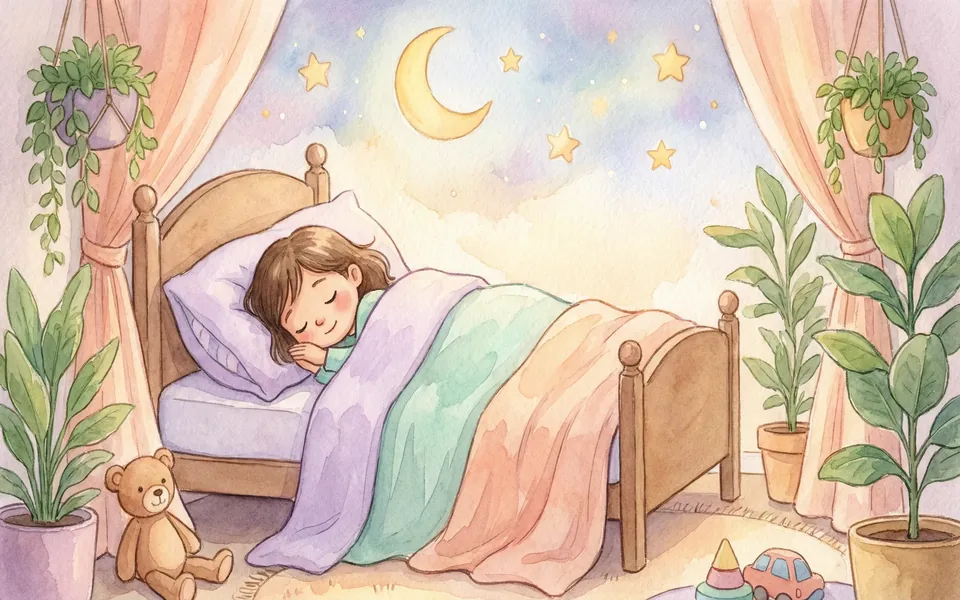
Most parents have seen it: after a short night, small things feel big. A sock that won't go on, a sibling who looked at them the wrong way. It's tempting to call it a bad mood — but often, it's a tired brain.
What the research shows
In one of the few experiments of its kind, researchers brought 53 children aged 7 to 11 into a sleep lab. They measured how the children responded to emotional situations once after a normal night, and again after two nights of shortened sleep (7 hours, then 6 hours in bed).2
After the short nights, the children's emotional responses changed — and, perhaps surprisingly, mostly in response to positive experiences. Tired children got less lift out of the good moments, and had a harder time regulating how they felt. It's a small study, so it needs repeating, but it matches what many parents notice at home.
How much sleep do children need?
In 2016, the American Academy of Sleep Medicine published recommendations based on a review of more than 800 studies, endorsed by the American Academy of Pediatrics:1
- 3 to 5 years: 10 to 13 hours per 24 hours, naps included
- 6 to 12 years: 9 to 12 hours
- 13 to 18 years: 8 to 10 hours
These are ranges, not targets to hit to the minute. Some children are at the low end and thrive; others need the top of the range.
What you can notice at home
The interesting question isn't how much sleep children need in general — it's what your child needs. In Family Recap, each day's recap starts with the night before: when your child went to bed, when they woke up, and how the night went. After a few weeks, you can compare the days after earlier and later bedtimes and see whether there's a pattern for your child.
- Paruthi S, et al. Recommended Amount of Sleep for Pediatric Populations: A Consensus Statement of the American Academy of Sleep Medicine. Journal of Clinical Sleep Medicine, 2016. PubMed
- Alfano CA and colleagues. Sleep restriction alters children's positive emotional responses, but effects are moderated by anxiety. Journal of Child Psychology and Psychiatry, 2020. Summary
This article is general information, not medical advice. If you're worried about your child's sleep, mood or eating, talk to your pediatrician.